
Dental First Aid
Helpful information if you have concerns or complications before or after your treatment.


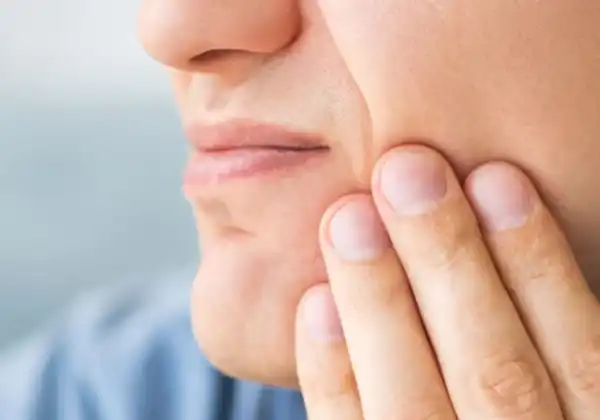
What to do if you have a swelling
Swellings in the mouth and swelling of the face should never be ignored, particularly in children, because most of the time swelling means infection – a dental abscess.
If you have had toothache you may notice that the side of your face has swollen up and/or that a lump has developed on the gum near the painful tooth. Painkillers can help in the short term, but most of the time the best solution is to treat the dental problem.
Using a cold pack – a bag of peas from the freezer wrapped in a towel – held against the side of the face for a few minutes can help reduce the pressure. It is very important not to use anything hot against the swelling because this can make it worse.
Rinsing with warm salt water can help a swelling inside the mouth to drain.
Phone our Call Centre on 0333 405 0290 for an appointment, but if the swelling is so severe that it stops you swallowing or is making it difficult for you to breathe then you should go straight to A&E.
At your urgent and emergency care appointment the cause of the swelling will be diagnosed and x-rays may be needed to confirm the source of the infection. If possible the abscess will be drained under local anaesthetic and this provides immediate relief from the pain as the pressure is released. In many circumstances the problem tooth can be extracted but sometimes antibiotics are needed to bring the infection under control before the tooth can be removed. Every case is individual and your dentist will advise as to the most appropriate treatment for you.
Sometimes facial swelling can appear after dental treatment e.g. if there has been a particularly difficult extraction, but you will have been warned about this and advised about what to do. If this happens unexpectedly then please contact us again.
Post-extraction instructions
A clean mouth heals more rapidly than a dirty one so start brushing again as soon as possible. ‘Spit don’t rinse’.
Avoid vigorous exercise today. You should rest, but not lie down flat.
When you go to bed at night, sleep with your head raised (blood stains on your pillow are normal and so you may wish to cover your pillow, perhaps with an old towel).
You are likely to feel uncomfortable after the extraction. If necessary use suitable painkillers at home, such as paracetamol or ibuprofen as advised by the dentist.
Where local anaesthetic has been used, you will feel numb. Take care to avoid biting or burning your lips, tongue or cheeks.
Do not rinse out your mouth today.
Starting tomorrow, use a warm salt water mouthwash. Take a level teaspoonful of salt and add it to a glass of warm water. Use this to bathe the extraction site/s. You must do this after every meal and at bedtime. Do not rinse vigorously.
If you are a smoker, please avoid smoking for 48 hours after the extraction to enable healing to occur.
Avoid alcohol for the rest of the day.
Do not be worried if you feel small pieces of bone at the extraction site. These will go with time.
Occasionally, a painful infection may occur in the tooth socket a few days after the extraction; this is unpredictable. Please telephone for advice on 0333 405 0290.
If the area becomes swollen or you are worried about how the socket is healing, please telephone for advice on 0333 405 0290.
Please make arrangements for a regular check-up with a dentist.
IF EXCESSIVE BLEEDING OCCURS:
If the bleeding continues for more than 2 hours, contact us on 0333 405 0290.
Avoid all exertion. Sit down but do not lie down.
Clean your mouth with a damp cloth or handkerchief to see which part of your mouth is bleeding and spit out, but do not rinse.
Take a damp handkerchief or piece of cloth and make a small pad. Place it on the bleeding point. Sit down and bite firmly on the pad. Maintain constant, steady pressure for 30 minutes.